
Last updated: October 18, 2026.
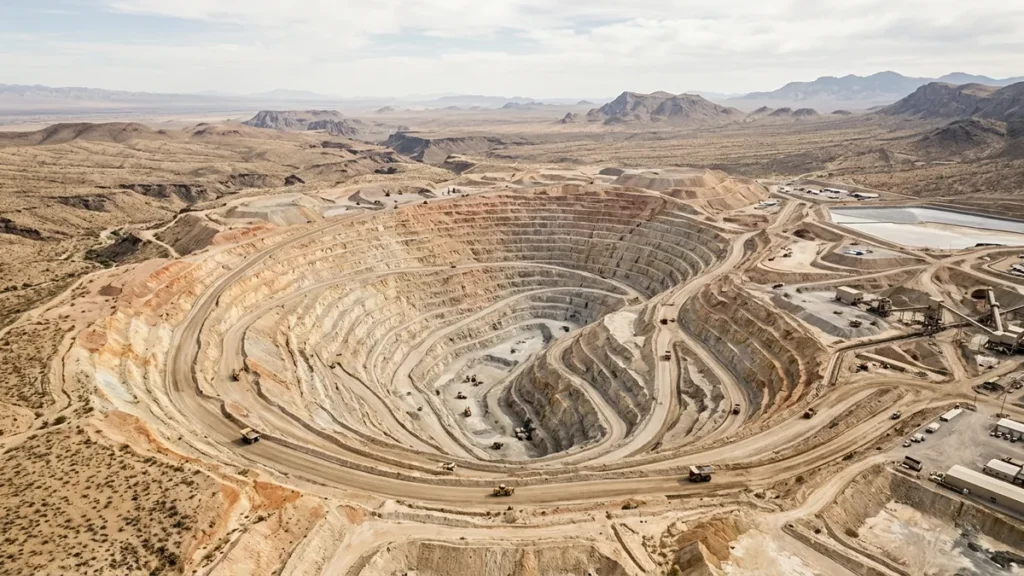
Seven companies come up again and again when investors look for rare earth stocks outside China: MP Materials, Lynas, Iluka, Energy Fuels, Neo Performance Materials, Arafura and USA Rare Earth. Only two of them, MP and Lynas, separate rare earths at scale today. We don’t rank them, because the right choice depends on the price you pay and your own situation. Instead, here are what each one does, where it stands in October 2026 and how to judge any of them before you buy.
The companies investors usually look at
| Company | Main listing | What it does | Where it stands (October 2026) |
|---|---|---|---|
| MP Materials | NYSE: MP | Mines and separates rare earths at Mountain Pass, California; making metal and magnets in Texas | Produced 2,599 t of NdPr in 2025; ten-year $110/kg NdPr price floor from the US Department of Defense |
| Lynas Rare Earths | ASX: LYC | Mines at Mt Weld, Australia; separates in Kalgoorlie and Malaysia | Largest producer outside China: 7,260 t of NdPr and A$222.4M net profit in the year to June 2026 |
| Iluka Resources | ASX: ILU | Mineral sands producer building a rare earths refinery at Eneabba, Western Australia | Refinery about 60% built at June 30, 2026; commissioning planned for 2027; backed by an A$1.65bn government loan |
| Energy Fuels | NYSE American: UUUU | US uranium producer that also separates rare earths at its White Mesa Mill in Utah | Upgrading its rare earth circuits; rare earths are one part of a wider business |
| Neo Performance Materials | TSX: NEO | Processes rare earths and makes magnet materials and magnets | Further down the supply chain, closer to end customers |
| Arafura Rare Earths | ASX: ARU | Developing the Nolans rare earth project in Australia’s Northern Territory | Pre-production developer: no revenue from rare earths yet |
| USA Rare Earth | Nasdaq: USAR | Building a magnet plant in Oklahoma and developing a deposit in Texas | Early-stage; added to China’s export control list in June 2026 |
Company names are examples for educational purposes, not recommendations. Figures from company results and ASX releases; see sources below.
Why “outside China” matters
Most investors looking at this sector want exposure to supply that doesn’t depend on China. The numbers show why that is a short list. According to the US Geological Survey, world rare earth mine production was about 390,000 tonnes (rare earth oxide equivalent) in 2025:
| Country | 2025 mine production (t REO, estimated) | Share of world |
|---|---|---|
| China | 270,000 | about 69% |
| United States | 51,000 | about 13% |
| Australia | 29,000 | about 7% |
| Burma (Myanmar) | 22,000 | about 6% |
| Rest of world | about 18,000 | about 5% |
Source: USGS Mineral Commodity Summaries 2026. Shares calculated by Rare Earth Picks.
Mining is only half the story. Much of the ore mined outside China has historically been sent to China for separation, so the companies that can separate and refine rare earths themselves, like Lynas and MP Materials, are scarcer still. That is why projects such as Iluka’s Eneabba refinery attract so much attention, and why China’s export controls move these stocks. We explain the controls in China rare earth export controls in 2026.
How these companies differ
Established producers
MP Materials and Lynas already mine, separate and sell rare earths at scale. They have revenue, audited accounts and years of production history, which makes them the easiest to analyze. Their results still swing with NdPr prices, and both are exposed to policy decisions in the US, China, Australia and Malaysia. We compare them in detail in MP Materials vs Lynas Rare Earths.
Builders
Iluka is an established mineral sands company with a large rare earth refinery under construction. That combination means an existing business pays some of the bills, but the rare earth part won’t produce revenue until the refinery is commissioned, which Iluka plans for 2027. At June 30, 2026, it had spent A$1,101 million on the refinery.
Diversified companies
Energy Fuels is mainly a uranium producer that also separates rare earths. If you buy it for rare earths, check how much of its revenue and future plans actually come from them.
Downstream and magnet companies
Neo Performance Materials and USA Rare Earth sit closer to the end customer: magnets for motors and electronics. Their economics depend on manufacturing margins and competition from established Asian magnet makers, not only on rare earth prices.
Developers
Arafura and other developers own deposits and plans, but not yet a producing business. These are the highest-risk names: they often need to raise money, which can dilute shareholders, and projects can be delayed or never built.
A framework for judging any rare earth stock
1. Is it producing, or promising? Check for revenue, not just resource estimates.
2. Where is it in the supply chain? Mining, separation, metal and magnets are different businesses.
3. What does it produce? Light rare earths (like NdPr) and heavy rare earths (like dysprosium and terbium) have different prices and supply situations.
4. How strong is the balance sheet? Look at cash, debt and how growth will be funded.
5. Who are the customers? Long-term offtake agreements add visibility; dependence on one buyer adds risk.
6. How much depends on policy? Price floors, government loans and export controls can help or hurt.
7. What’s the valuation? A good company can be a poor investment at the wrong price.
8. What could go wrong? Read the risk factors in the annual report first.
Prefer not to pick?
A fund spreads your money across many companies, though most rare earth funds also hold other metals. See our guide to the best rare earth ETFs. Whichever route you choose, size the position for a sector that can fall sharply.
Where you can buy them
US-listed names (MP, UUUU, USAR) are available through almost any US broker. ASX- and TSX-listed companies need a broker with international access, or an over-the-counter listing where one exists, which can be less liquid.
A list of “best stocks” is really a list of opinions at a moment in time. The table above will change as projects advance and prices move; the framework won’t. If you can explain what a company does, how it makes money, what could hurt it and why the price is reasonable, you’re better prepared than most people who copy a ticker from a headline.