
A year ago, USA Rare Earth (Nasdaq: USAR) was mostly a plan: a magnet factory under construction in Oklahoma and a deposit in Texas that might one day feed it. That’s no longer true. Since September 2026 the company owns a producing mine in Brazil, a metals and alloy maker in the UK, a magnet line commissioned in March 2026, and about $1.5 billion in cash. What it doesn’t have yet is meaningful revenue. Buying the shares today is a bet that it can turn those pieces into a working mine-to-magnet business, with strong US government backing but no guarantee on timing or profits.
Four businesses in four countries
The easiest way to understand USA Rare Earth now is to follow the supply chain from the ground to the finished magnet, because the company has bought or built a piece at almost every step.
- Mining, Brazil. Serra Verde’s Pela Ema mine in Goiás has been producing since January 2024. USA Rare Earth completed the roughly $2.8 billion combination on September 3, 2026. The company describes Serra Verde as the only scaled producer outside Asia of all four magnet rare earths, including the heavy ones, dysprosium and terbium. Its first stage is expected to reach a run rate of about 4,000 tonnes a year of rare earth oxide by the end of 2026, with a second stage targeting an average of 6,400 tonnes.
- Metals and alloys, UK. Less Common Metals turns rare earth oxides into the metals and alloys that magnet makers need, another step of the chain that China dominates.
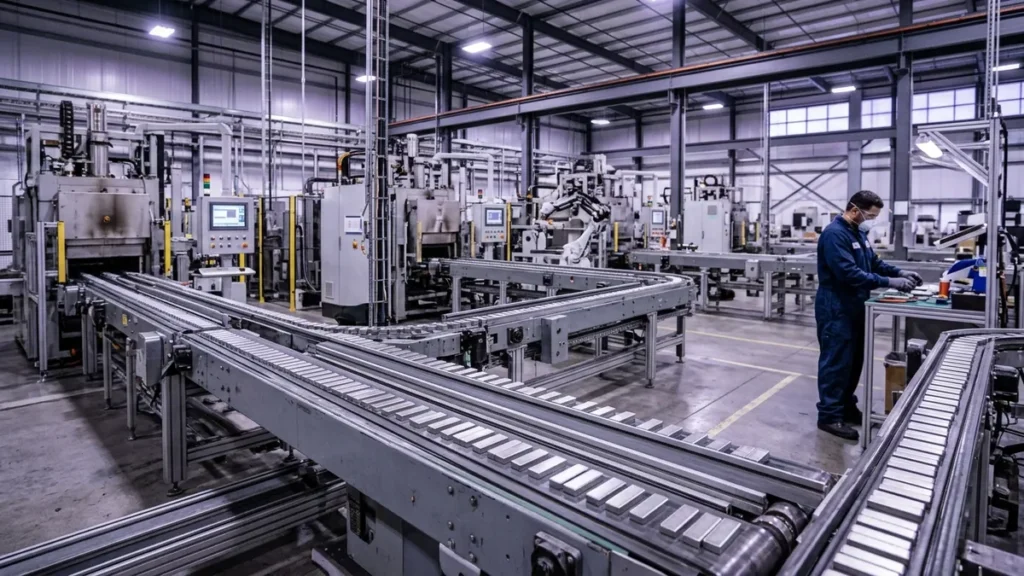
- Magnets, US. The Stillwater, Oklahoma plant commissioned its first commercial line in March 2026. The target is a run rate of 600 tonnes of magnets a year in the fourth quarter of 2026, and about 1,200 tonnes once a second line is added in early 2027. A much larger plant in Blacksburg, South Carolina is planned for 6,400 tonnes of magnets and 5,000 tonnes of metal and alloy, with commissioning targeted to begin in 2028.
- A future US mine. Round Top in Texas is a deposit rich in heavy rare earths. The company bought its former partner, Texas Mineral Resources, in August 2026, and expects to publish a full feasibility study in the first quarter of 2027.
It also holds a stake in Carester, a French company building a plant to recycle end-of-life magnets. Few rare earth companies outside China cover this much ground, which is the core of the bull case. It’s also the core of the execution risk: four very different businesses, most of them new or still ramping up, under a CEO, Thras Moraitis, who took over on October 1, 2026 after running Serra Verde.
What the numbers say so far
The most recent full quarter reported is the one to June 30, 2026, before Serra Verde was added. Revenue was $5.8 million, against a gross loss of $1.6 million and a loss from operations of $46.3 million. Operations used $56.9 million of cash in the quarter. The balance sheet tells a very different story: cash stood at about $1.53 billion at the end of June, after the company raised $1.5 billion from investors earlier in the year. Those figures come from the company’s second-quarter 2026 results.
In other words, USA Rare Earth is funded but not yet earning. The next results will be the first to include Serra Verde for part of the quarter, which should change the revenue line a lot, and make it harder to compare with anything the company reported before.
Washington as a backer
In June 2026 USA Rare Earth signed definitive agreements with the US Department of Commerce for up to $1.6 billion: up to $277 million in federal funding and up to $1.3 billion in senior secured loans under the CHIPS Act, released as the company hits project milestones. The deal also gives the government a minority stake through shares and warrants. We compare this package with what MP Materials and Energy Fuels received in our guide to US government-backed rare earth stocks.
That support matters for two reasons. It lowers the risk that the projects stall for lack of money, and it makes the company part of US industrial policy, with the political attention that comes with it. The flip side arrived on June 22, 2026, when China added USA Rare Earth and MP Materials to its export control list.
What could go wrong
Integration. Combining a Brazilian miner, a British metals maker and an American magnet start-up within a few months is hard, and the management team has just changed. Delays at any one step hold up the steps that depend on it.
Ramp-up. Every production target above is a target. Magnet lines need customers to qualify their product before volumes grow, and mines rarely reach design output on the first schedule.
Dilution. The company has paid for growth largely with new shares. Former Serra Verde investors received a large stake in the combined company, and government warrants add more potential shares. Each new share means existing holders own a smaller slice.
Prices and politics. Rare earth prices are still set mostly by China, and a company on China’s export control list is exposed to whatever Beijing decides next. Government loans also rank ahead of shareholders if things go wrong.
Valuation. With revenue this small, the share price reflects expectations about the late 2020s, not current earnings. That’s why the stock can swing sharply on announcements alone.
How it differs from the other US names
MP Materials already separates rare earths at scale in California and is ramping up magnets in Texas; its story is about expanding a business that works. Energy Fuels makes most of its money from uranium and adds rare earths through its Utah mill. USA Rare Earth started from the magnet end and has bought its way back to the mine, so it has the widest footprint of the three but the shortest track record. Its access to heavy rare earths through Serra Verde is the part that sets it apart, since dysprosium and terbium are the scarcest magnet elements outside China. We explain why they matter in our guide to dysprosium and terbium stocks.
Dates to watch
- Third-quarter 2026 results: the first numbers that include Serra Verde.
- End of 2026: whether Stillwater reaches its 600-tonne run rate and Serra Verde its first-stage run rate.
- First quarter of 2027: the Round Top feasibility study, which will show what a Texas mine would cost and produce.
- 2028: the planned start of commissioning at Blacksburg.
We follow these milestones, along with those of nine other companies, in our monthly rare earth producers tracker. The details on Serra Verde in this article come from the company’s announcement of the completed combination, filed with the SEC on September 4, 2026.